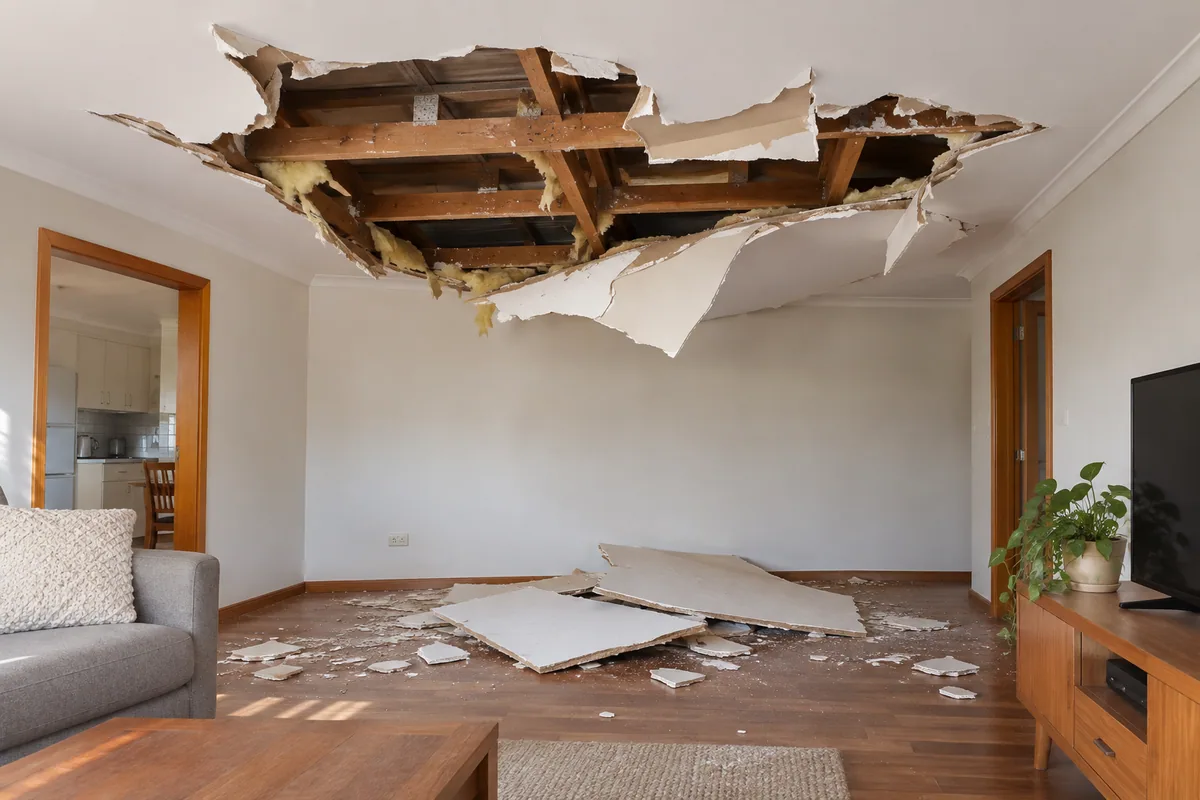
Start with what you can see.
A short, clear first call helps.
From a safe location, explain the room, the suburb and when the change was noticed. Say whether the ceiling has fallen, is still hanging or has changed shape. Mention any water near lights or fittings without approaching it.
Tell us whether a plumber, roofer, electrician or building professional has already attended. For an apartment or managed property, have the authorised access contact ready. Safe photos can help explain the visible situation, but they cannot replace an assessment.
Prepare a ceiling damage enquiryPut the next stages in the right order.
The work depends on safety, the source and the condition of the materials. Ask which tasks can be managed within the restoration scope and which need another suitably qualified specialist.
Before comparing a ceiling-collapse quote.
Ask what has been assessed and which work is included: safety visits, debris handling, insulation, extraction, drying, repairs and finishing can be separate parts. Give the room size, floor level, access and any building restrictions.
What affects the scope and quote?Local enquiry information.
Choose the broad area, then confirm service availability and access at your address with the team.
Frequently asked questions
Should I make a hole in a bulging ceiling?
No. Stay clear of the area and arrange appropriate professional help. Standing beneath or disturbing damaged plaster can expose you to collapse and electrical hazards.
Can I start clearing the fallen plaster?
Do not enter an unstable area or disturb materials until the relevant safety and hazardous-material concerns have been assessed. Tell the team what you can observe from a safe location.
Do I need to know who caused the leak before calling?
No. Begin with the visible damage, source information if known and an access contact. The source investigation, restoration work and questions about responsibility or insurance may involve different parties.
Related guides.
Damaged-building safety information
Follow emergency-service directions. Read SafeWork NSW guidance on property hazards after storms and floods for electrical, structural and hazardous-material considerations.