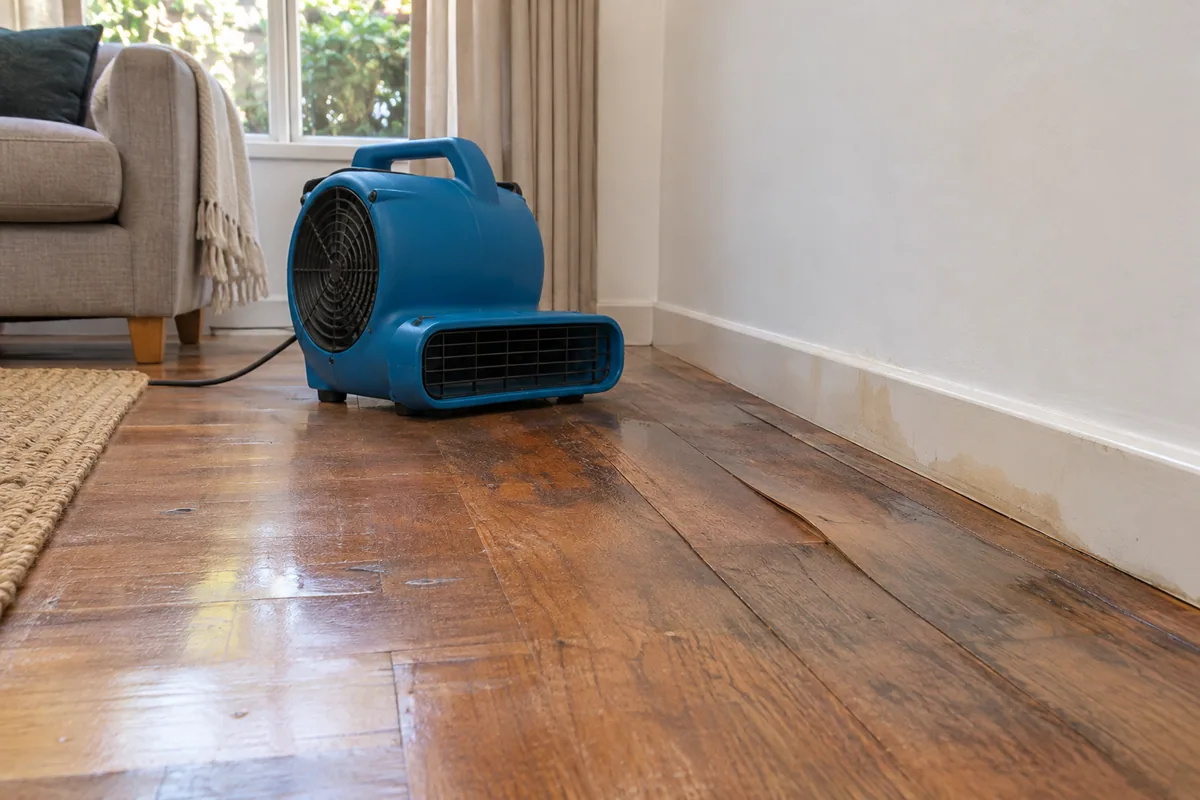
Identify the floor before choosing a method.
Solid timber, engineered boards and laminate are different products. If you have installation or product information, have it ready for the assessment. Mention the floor beneath, any underlay and whether the assembly is known.
Changes such as raised edges, gaps, staining or a changed finish are useful observations. They do not establish whether the floor can be retained or which repair will be appropriate. Avoid promising yourself that a particular machine will reverse the damage.
Look at the water path, not only the puddle.
Water can reach board edges, adjacent skirtings, wall bases and layers beneath the finish. Explain which rooms were affected and whether there is access to the floor or ceiling below.
The source, possible contamination and material condition influence the scope. Bulk water removal, concealed-moisture checks, removal decisions and controlled drying may be separate stages. Do not assume an apparently dry surface answers all of them.
Ask what a drying assessment can establish.
Describe the incident time and the status of the source repair. Ask which areas can be checked and how the findings will inform a proposed drying setup or a recommendation for another flooring specialist.
Some situations may require more access or removal before concealed materials can be assessed. Any specialist floor-drying method and equipment availability need confirmation for the construction, rather than being selected by a search term alone.
Leave finishing decisions until the scope is clear.
Discuss the sequence before sanding, coating, relaying boards or enclosing affected layers. The person managing repairs needs to understand the source status, material decisions and remaining assessment limitations.
For the first enquiry, provide the suburb, flooring type if known, affected rooms and any work already completed. The team can discuss whether timber-floor drying assessment is the appropriate route and confirm the available professional scope.
Frequently asked questions
Can water-damaged timber flooring always be saved?
No universal answer is possible. Construction, contamination and material condition all matter. An assessment should explain the reasoning behind retention, drying or removal recommendations.
Is laminate treated the same as solid timber?
No. Explain the actual product or share its details during the enquiry. The condition and construction need to inform the scope.
Should I sand the wet boards first?
Discuss moisture, source repairs and the proposed restoration scope before arranging finishing work. Sanding is not a substitute for understanding the affected assembly.
Find local information.
Explore timber floor drying enquiries by area. Confirm the available service and attendance directly with the team.