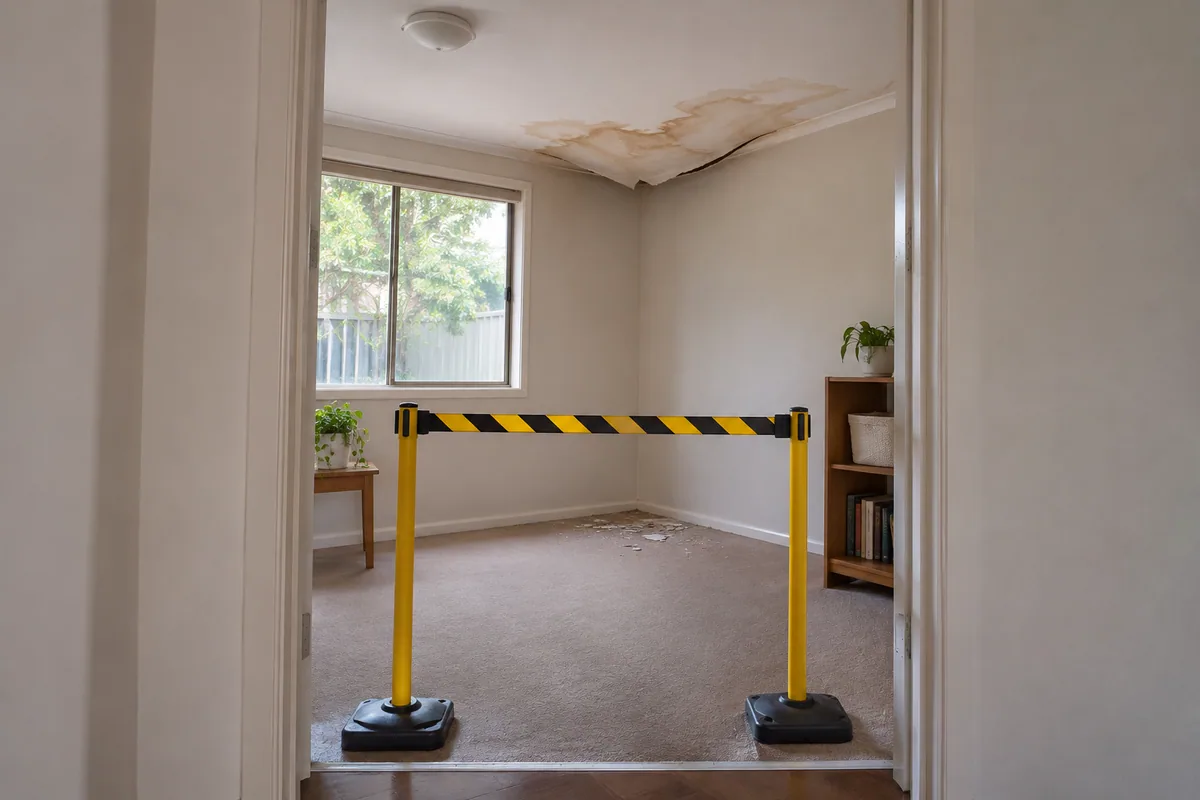
Keep the area clear.
Keep people and pets away from sagging ceilings, fallen debris and water near electrical fittings. Do not touch wet electrical equipment, puncture ceiling plaster or go into a damaged roof space.
If anyone is injured or there is immediate danger, call 000. Follow emergency-service directions and any evacuation instructions.
Tell us what has already happened.
Explain whether a ceiling has fallen, whether water is still entering and which services or trades have attended. Mention restricted access, apartment or strata arrangements and whether the area has been isolated.
Electrical, structural and potentially hazardous-material concerns may require appropriately qualified specialists before restoration can proceed. Ask which parts are included in the proposed scope.
Then plan extraction, cleanup and drying.
Once the relevant hazards have been addressed, the assessment can focus on water, debris, wet insulation and affected building materials. This establishes a sensible order of work instead of rushing straight to a cosmetic repair.
Frequently asked questions
Does make safe mean the room is repaired?
No. Initial safety work and assessment are separate from cleanup, drying and repair. Ask what has been completed and what still needs to happen before the room can be used normally.
Should I switch on a fan in the wet room?
Do not use electrical equipment in an affected area until electrical safety has been established. Water-damaged electrical equipment needs the appropriate professional assessment.
Can I send a photo of the damaged area?
A photo can help explain the situation if it can be taken from a safe location. Do not approach unstable ceilings, electrical hazards or contaminated water to take it.
Related guides.
Find local information.
Explore emergency make safe enquiries by area. Confirm the available service and attendance directly with the team.