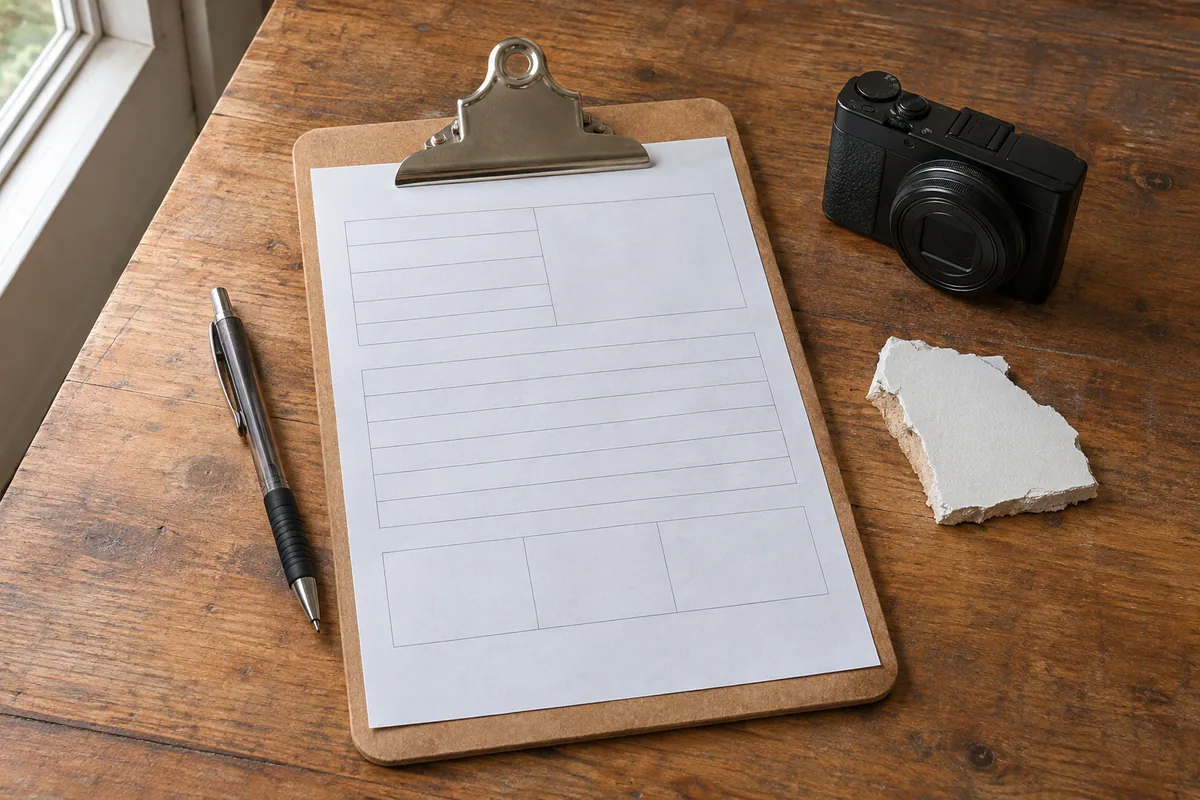
Record the incident without taking risks.
From a safe location, note when the damage was first noticed, which rooms were affected and the known source. Keep photos you can take without entering an unsafe area.
Save the details of any plumber, electrician, emergency service or other contractor who has attended. Their work and findings may be relevant to later discussions.
Ask what documentation the work can provide.
Discuss the available scope notes, observations, photos and moisture records before work starts. The record should distinguish what was observed from assumptions about the cause.
Ask your insurer or property manager which documents they need and who can authorise work. A restoration document is not a guarantee that a policy covers the incident.
Keep decisions and invoices together.
Retain the agreed scope, changes, invoices and correspondence. If another trade needs to resolve the source or assess a hazard, note that separately from cleanup and drying. Coverage and payment decisions remain with the relevant insurer and parties.
Frequently asked questions
Will you guarantee my insurance claim is approved?
No. Your insurer assesses the claim under your policy. Restoration documentation can help describe the damage and work, but does not determine coverage.
What information should I have ready?
Have the property suburb, incident date, affected rooms, known water source and any claim reference available. Only share personal or policy details directly with the team when needed.
Do I need approval before restoration starts?
Ask your insurer, property owner or authorised property manager about approval requirements. Do not assume that submitting an enquiry on this site authorises work.
Related guides.
Find local information.
Explore insurance documentation enquiries by area. Confirm the available service and attendance directly with the team.