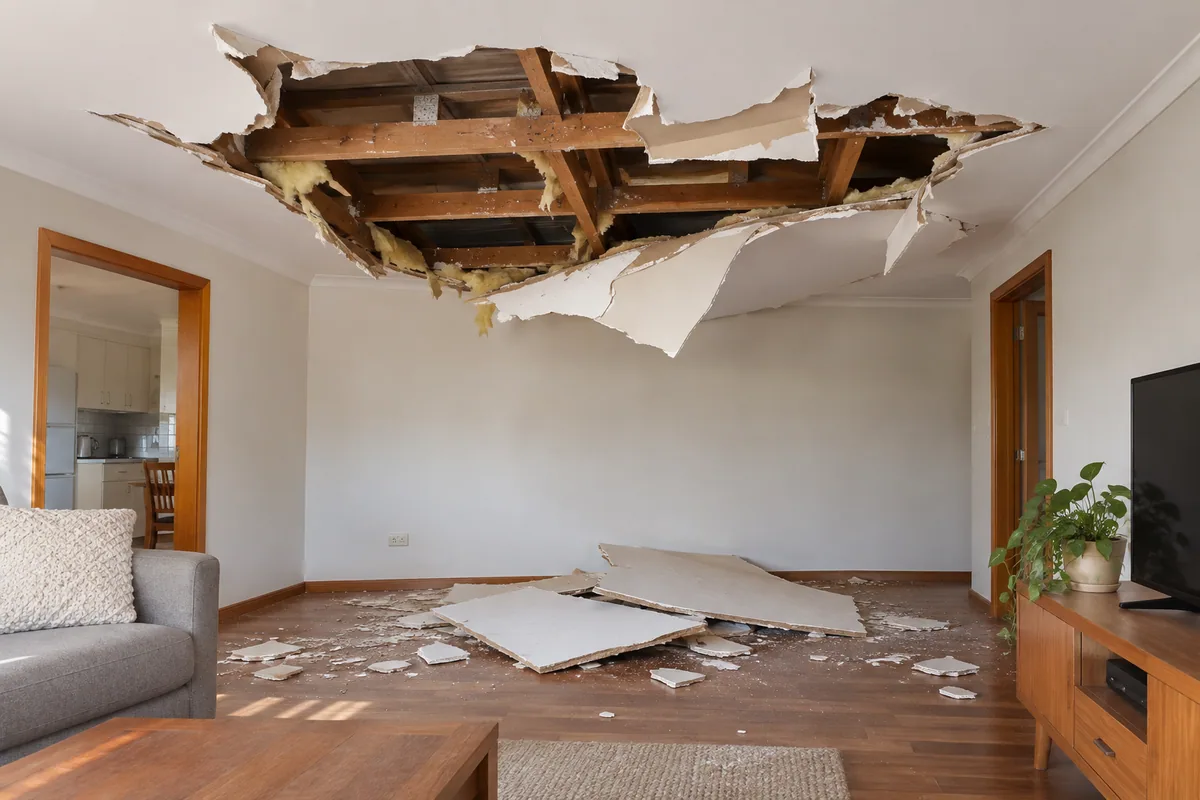
Water is a reason to investigate the assembly.
Roof leaks, plumbing leaks and water from an upper level can affect the ceiling lining and materials above it. A stain, sag or bulge should be described to the people assessing the damage.
Do not assume every stain means a collapse is imminent, or that a small mark means the problem is minor. Keep clear of damaged or unstable areas and arrange the appropriate assessment.
A dry ceiling can still need professional assessment.
Ceiling failure is not always explained by an active leak. Material deterioration, fixing concerns or other building conditions may need investigation by a suitably qualified professional.
Tell the team about previous repairs, recent changes and any cracking, sagging or falling material noticed before the incident. Do not poke, pull or press on the ceiling to test it.
The first decision is about safe access.
Keep people away from hanging plaster and affected electrical fittings. Do not puncture a bulging ceiling or enter a damaged roof space. Call 000 if there is immediate danger or injury.
Electrical, structural and hazardous-material concerns may require separate specialists. Ask what must be checked before debris, insulation or damaged linings are disturbed.
The repair needs to account for the cause.
Replacing plaster without dealing with an ongoing water source leaves the underlying problem unresolved. Where materials are wet, the scope also needs to consider removal and drying before reinstatement.
Ask who is addressing the source, who is assessing the structure and which restoration tasks are included. A clear division of work helps avoid treating the final paint finish as proof that every earlier issue has been resolved.
For flood and electrical safety information
Follow emergency-service directions. For immediate danger, call 000. See NSW SES flood guidance and NSW Health household safety advice.